
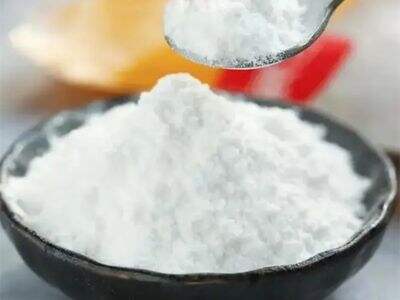
The particle size of hydroxide magnesium is important for use in a lot of products. But why does it matter so much? It influences everything from how well it works to how safe and effective it is in the body. At our Dafey company, we think it’s worth knowing how this can benefit your hydroxy magnesium, for the best possible results.
The significance of particle size to hydroxide magnesium products
Particle size is pivotal for hydroxide magnesium products as it dictates their performance and usability in various applications. Smaller particles have more surface area per volume, so they can react more quickly and more efficiently in chemical reactions. The use of finely divided Magnesium hydroxide powder in products such as antacids can have a beneficial effect of providing faster relief of acidity. Conversely, larger particles could be applied to situations in which a slow, controlled reaction is warranted.
The Effect of Particle Size in Applications of Magnesium Hydroxide
The efficiency of magnesium hydroxide applications may be significantly affected by the particle size. For example, in in water treatment, the finer the particles, the better as they dissolve faster and the pH adjustment is more effective. However, for the purposes of agricultural use, larger particles may be beneficial in that they tend to release magnesium more gradually, thus providing an extended release over a longer duration to feed the plant. This variability indicates the importance of selecting the correct particle size for an application to achieve optimal performance.
The influence of particle size for the absorbency and the bioavailability of magnesium hydroxide
When it comes to health supplements, the particle size of hydroxide mineral magnesium can determine how well your body can absorb and utilize the nutrient. Smaller particles tend to be absorbed better, meaning the body has a better opportunity to utilize the Magnesium hydroxide. This is crucial with supplements as the higher the bioavailability and absorb then the higher the body can access this magnesium for muscle functioning and nerve functioning benefits.
Optimizing the utilization of magnesium hydroxide via particle-size dependence
Selecting the optimum particle size of hydroxide magnesium can be advantageous for its use in different applications. This requires developing an appreciation for what the application requires, and how various particle sizes influence the results. For example, in the pharmaceutical industry, very small particles might be required in order for a drug to be fast and effective. In construction, meanwhile, “coarser particles could even be desirable to help the material mix in with other ingredients” to make building materials, she said.
The correlation between particle size and the performance of hydroxide magnesium in different applications
Magnesium hydroxide shows drastically varying efficacy for various uses, based on particle size. In environmental remediation scenarios, smaller particles may be desirable in order to rapidly and/or completely absorb contaminants. Larger particles, however, can be used in fire retardants in which there is a need for slow release over a longer period of time. For each of these applications, a delicate assessment is necessary to demonstrate how particle size in combination with other parameters can actually gain the desired results.
By understanding particle size, companies such as Dafei are able to develop better-performing Modified magnesium hydroxide powder for individual requirements and applications. It is this knowledge that helps to both improve the performance of products and allows their safe and efficient use.
Table of Contents
- The significance of particle size to hydroxide magnesium products
- The Effect of Particle Size in Applications of Magnesium Hydroxide
- The influence of particle size for the absorbency and the bioavailability of magnesium hydroxide
- Optimizing the utilization of magnesium hydroxide via particle-size dependence
- The correlation between particle size and the performance of hydroxide magnesium in different applications